
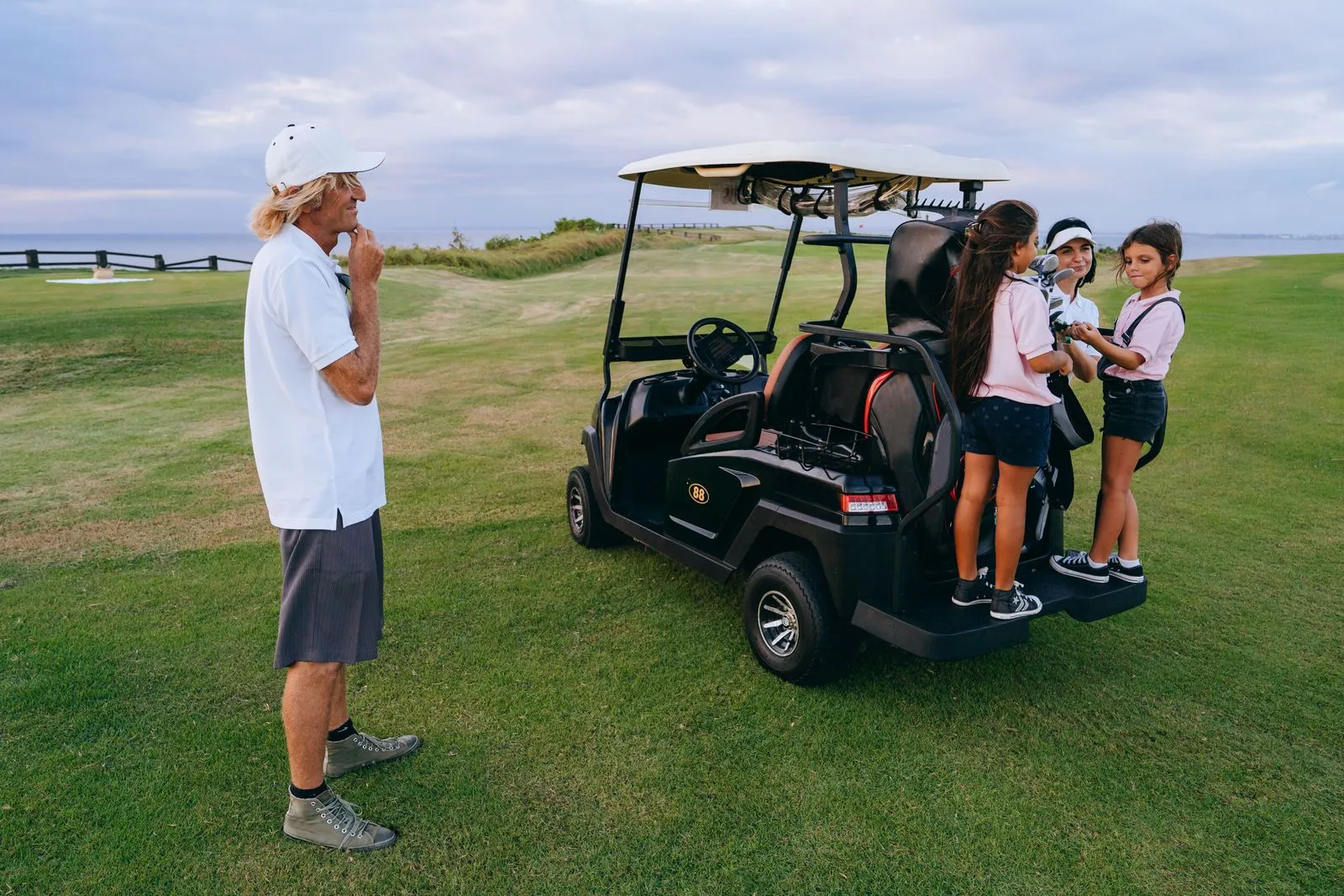
Your first golf lesson is a chance to get comfortable, learn the basics, and tell your instructor what you hope to improve. You do not need to arrive with a polished swing or a full set of clubs. A good introductory session starts at your pace, with simple guidance and time to practice. Knowing what to bring and what to ask can make the experience less intimidating and help you get more from your lesson.
Bring the basics
Wear comfortable clothes that let you turn and bend easily, along with athletic shoes or golf shoes with good grip. Choose layers if the weather may change, and bring water and sun protection for an outdoor lesson. Check with the instructor about the practice location and any facility rules before you go.
If you already own clubs, bring them so your instructor can see what you use. If not, ask whether clubs are available to borrow. You can also bring a glove if you have one, but beginners can often start without buying extra equipment. Arrive a little early to find the practice area and share any injuries or mobility concerns.
Expect simple foundations
Your instructor will likely ask about your experience and goals, then help you get familiar with the club and ball. You may work on grip, stance, posture, alignment, and a small swing motion before trying fuller swings. The focus is usually on understanding a few key movements, not hitting perfect shots.
You might practice with short shots, such as putting or chipping, or hit balls at a range, depending on the lesson plan. Expect pauses for demonstrations and feedback. It is normal to miss the ball, hit it inconsistently, or need a movement explained more than once. Tell the instructor when a cue feels confusing or uncomfortable.
Ask questions that help
Ask what the instructor wants you to focus on first and why. You can also ask how to hold the club, where to aim, and what a balanced finish should feel like. If you are unsure about a term or instruction, ask for a demonstration or a simpler explanation rather than guessing.
Before the lesson ends, ask what you can practice on your own and how often to work on it. Find out which clubs or skills to learn next, and whether there is a simple drill you can repeat safely. If your goal is to play a round, ask what basic etiquette and course skills to learn before heading out.
Leave with a clear next step
A useful first lesson should leave you with one or two manageable things to practice, such as a comfortable grip or a short putting routine. Write down the instructor’s main cues after the session while they are fresh. Keep practice brief and focused, and stop if you feel pain rather than trying to push through it.
Progress looks different for every beginner. You do not need to master every part of golf in one visit. At First Tee Golf in Jacksonville, beginners can use an introductory lesson to build a foundation and identify what to work on next. Share your goals when you book so the instructor can tailor the session to your starting point.
Bring comfortable clothing, use available equipment if you are just starting, and approach the lesson as a chance to learn rather than perform. Ask questions, practice the basics, and leave with a simple next step. When you are ready, contact a local golf instructor to discuss an introductory lesson that fits your goals.